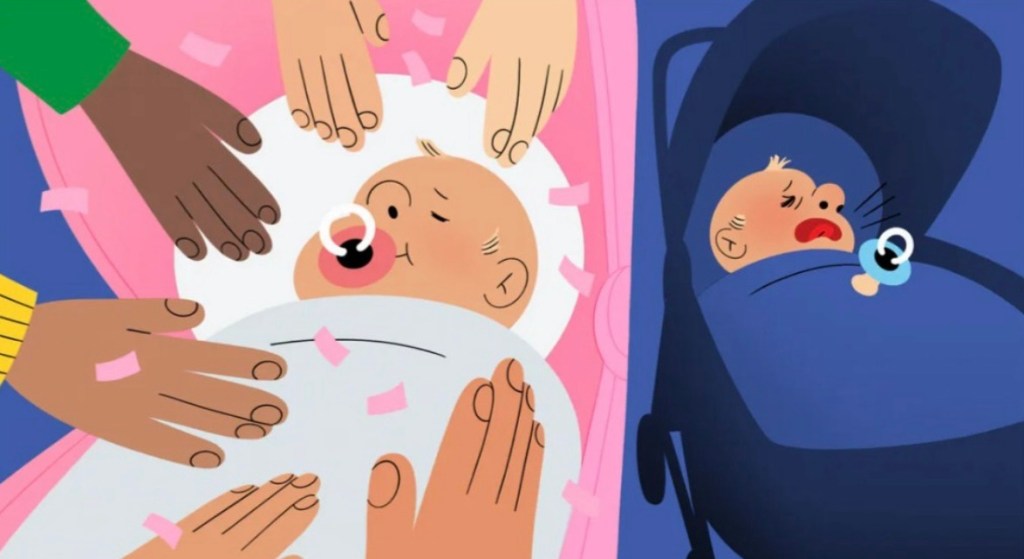
Imagine this: You’re a new mother.
Your first child is a girl a quiet sleeper, easy to soothe, a gentle presence in the home.
You feel affirmed. Capable. Lucky.
Then you have your second child a boy.
This time things are different. He’s fussy, seemingly agitated all the time.
He cries inconsolably.
He jerks awake suddenly.
Public outings become unpredictable, loud, and draining.
You love him, but you start to believe what everyone else says:
“Boys are just harder.”
“Girls are sweet, but boys are wild.”
“That’s just how boys are.”
But what if you’re wrong?
What if the difference isn’t in their nature
But in what’s been done to them?
Unseen Trauma, Misunderstood Reactions
Infant boys in certain countries particularly the U.S. are subjected to one of the most painful, invasive, and traumatic procedures imaginable: circumcision.
Often done within the first few days of life.
Often with inadequate or no anesthesia.
Often without the understanding of what it costs the child physically, neurologically, emotionally.
Now think again about that fussy baby boy.
Could his crying, his unrest, his sensitivity to touch and sound be signs of trauma not temperament?
Could his difficult behavior be a reasonable reaction to an unreasonable violation?
Birth of a Double Standard
This dynamic sets up a dangerous foundation:
Girls are perceived as sweet and calm because they were not violated. Boys are perceived as loud and difficult because they were.
But instead of questioning the cause, society affirms the stereotype:
“Boys are wild. Girls are angels.”
And just like that, circumcision trauma becomes coded as masculinity.
Pain becomes “normal male behavior.”
Dysregulation becomes “boy energy.”
Tears become weakness or defiance not communication.
We Harm Boys Then Blame Them for Crying
This is the cruel irony:
We wound boys, then judge them for reacting.
We traumatize them, then treat their pain as a character flaw.
We use their distress to further entrench gender bias:
“See? Girls are better behaved.”
“He’s just emotional.”
“He’s difficult.”
No one asks, “What happened to him?”
Systemic Effects of Early Betrayal
When a newborn boy is hurt and no one listens, no one soothes, and no one names the wound it shapes how he experiences the world:
Heightened stress response Sleep disruption Difficulty with trust and bonding Long-term dysregulation
And as he grows, this manifests in behaviors adults find inconvenient or undesirable.
So we continue the cycle:
Discipline the boy. Shame the boy. Label the boy.
And yet it all may have started with a choice made on his behalf without his consent while he screamed.
Final Thought
Circumcision doesn’t just hurt the body it shapes the narrative of boyhood.
It distorts parenting.
It feeds myths about masculinity.
It creates behavioral ripples that get misread as personality.
Until we acknowledge what’s really happening, boys will keep being blamed for reactions to wounds no one wants to admit they gave them.
Let’s stop pretending boys are born broken.
And start asking why we treat them as if they are.
Written by [J.L. BARRETT]
Follow us: @[Wholetruthblog] on [X/Twitter]
#Intactivism #MaleBodilyAutonomy #StopMGM
 The Whole Truth
2 responses to “Fussy Boys & Calm Girls: How Circumcision Distorts Our View of Gender Behavior”
The incidence of circumcision of newborn boys is declining by .4 of one percent each year.
LikeLike
The Circumcision Industry continues to promote circumcision to Americans, however the incidence of neonatal circumcision has been slowly declining by 4/10s of one percent per year for some time and now has declined to about 50 percent of male births.
https://en.intactiwiki.org/wiki/United_States_of_America#Statistical_data
Each healthy intact baby boy is an ambassador for intactness.
LikeLike